Soleus Air Air Conditioner Manual: A Comprehensive Guide
Welcome! This manual, dated 04/28/2026, provides detailed instructions for your Soleus Air conditioner, ensuring efficient operation and longevity. Explore the Internet Archive’s resources!
Soleus Air has established itself as a prominent provider of affordable and reliable cooling solutions for residential and commercial spaces. Their commitment lies in delivering comfort through innovative designs and user-friendly operation. This manual serves as a comprehensive resource, guiding you through the setup, operation, and maintenance of your Soleus Air air conditioner.
Understanding the core functionalities of your unit is crucial for maximizing its performance and lifespan. Soleus Air conditioners are engineered with efficiency in mind, offering various modes – cooling, fan, dehumidifying, and sleep – to cater to diverse climate control needs.
As of today, 04/28/2026, resources like the Internet Archive offer valuable insights into the brand’s history and product evolution. This guide, alongside online resources, empowers you to confidently utilize your Soleus Air conditioner and enjoy consistent, comfortable temperatures. Proper care, as detailed within, will ensure years of reliable service.
Understanding Your Soleus Air Model
Identifying your specific Soleus Air model is the first step towards effective operation. Locate the model number and serial number on the unit’s label – typically found on the side or rear panel. This information is vital for accessing specific support resources and replacement parts.
Soleus Air offers a diverse range of air conditioners, including portable, window, and through-the-wall units. Each model boasts unique features and specifications. Refer to the detailed diagrams within this manual to familiarize yourself with the components of your particular unit.
The Internet Archive, as of 04/28/2026, may contain archived versions of previous model manuals, offering comparative insights. Understanding the capacity (BTU), energy efficiency ratio (EER), and dimensions of your model will help optimize its placement and usage for maximum cooling performance and comfort.
Safety Precautions & Warnings
Prioritize safety! Before operating your Soleus Air conditioner, carefully review these crucial precautions. Disconnect the unit from the power source during cleaning or maintenance to prevent electrical shock. Never operate the unit with a damaged power cord or plug.
Ensure proper grounding to minimize risk. Do not insert objects through the vents, as this could damage the unit and create a safety hazard. Keep flammable materials away from the air conditioner. As of 04/28/2026, the Internet Archive holds safety guidelines for similar appliances.
This appliance is not intended for use by persons (including children) with reduced physical, sensory or mental capabilities, or lack of experience and knowledge, unless they have been given supervision or instruction concerning use of the appliance by a person responsible for their safety.
Installation & Setup
Begin installation! Carefully unpack your Soleus Air unit and verify all components are present. Refer to the 04/28/2026 date for warranty information, found on the Internet Archive.
Unboxing and Component Checklist
Carefully unpack your new Soleus Air air conditioner from its packaging. Before proceeding, thoroughly inspect the unit for any visible signs of damage that may have occurred during shipping. If damage is present, immediately contact the retailer or Soleus Air customer support.
Verify all components are included using the following checklist. Your package should contain: the Soleus Air unit itself, an exhaust hose, an exhaust hose connector, window mounting brackets (quantity two), control panel (if applicable – some models integrate controls directly on the unit), a remote control (if included), installation instructions (this manual!), and potentially foam gaskets for window sealing.
Important Note: Retain all packaging materials until you are completely satisfied with your air conditioner. The original packaging may be required for warranty claims or returns. The date 04/28/2026, as noted online, may be relevant for warranty registration. Consult the Internet Archive for further details regarding specific model component lists.
Proper Placement for Optimal Performance
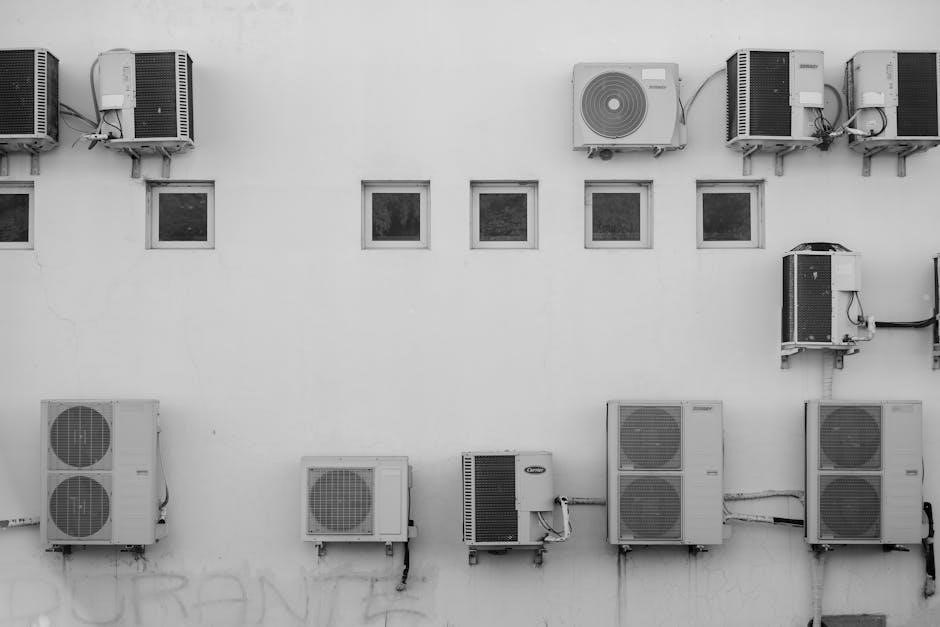
To maximize the efficiency of your Soleus Air conditioner, careful placement is crucial. Position the unit on a firm, level surface, ensuring at least 12 inches of clearance on all sides for adequate airflow. Avoid placing the unit in direct sunlight, as this can compromise cooling performance and increase energy consumption.
Avoid obstructions such as curtains, blinds, or furniture that may block the air intake or exhaust vents. The unit should be located near a grounded electrical outlet capable of handling the specified voltage and amperage (see Electrical Requirements section). Ensure the exhaust hose can reach a suitable window without excessive bending or kinking, as this restricts airflow.
Consider room size: This unit is designed for specific square footage. Refer to your model’s specifications. Remember today’s date, 04/28/2026, when checking online resources like the Internet Archive for optimal placement guides related to your specific Soleus Air model.
Installing the Exhaust Hose
Proper exhaust hose installation is vital for efficient operation. First, securely attach one end of the exhaust hose to the designated port on the back of the Soleus Air unit, ensuring a tight connection – typically a clockwise twist-lock mechanism. Next, connect the window adapter to the other end of the hose.
Window adapter installation varies depending on your window type. Adjust the adapter’s length to fit snugly within the window opening, minimizing gaps. Seal any remaining gaps with the provided foam strips or weather stripping to prevent hot air from re-entering the room. Secure the adapter firmly in place, following the instructions specific to your window.
Avoid excessive bending or kinking of the exhaust hose, as this restricts airflow and reduces cooling efficiency. Remember today’s date, 04/28/2026, and consult the Internet Archive for visual guides if needed. A properly installed hose is key to optimal performance!
Electrical Requirements & Grounding
Ensure your electrical system meets the Soleus Air conditioner’s requirements. Typically, these units operate on standard 115V/60Hz household power. Never use an extension cord; plug the unit directly into a grounded outlet. Using an extension cord can overheat and pose a fire risk, especially considering today’s date, 04/28/2026.
Proper grounding is crucial for safety. The power cord features a three-prong plug. Do not remove or alter the grounding prong under any circumstances. If your outlet lacks a ground, consult a qualified electrician to install one. Improper grounding can lead to electric shock.
Check the circuit breaker dedicated to the outlet. Avoid sharing the circuit with other high-wattage appliances. Overloading the circuit can trip the breaker or cause a fire. Refer to the Internet Archive for additional electrical safety information and diagrams. Prioritize safety during installation!
Operating Your Soleus Air Conditioner
Begin enjoying cool comfort! This section details how to utilize your Soleus Air unit’s features, referencing resources like the Internet Archive for assistance.
Control Panel Overview & Functions
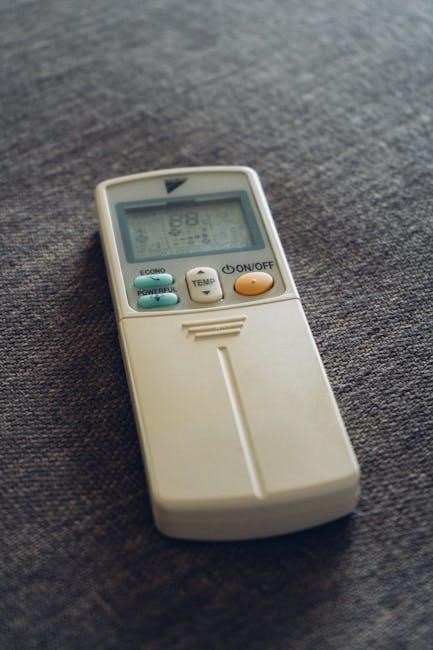
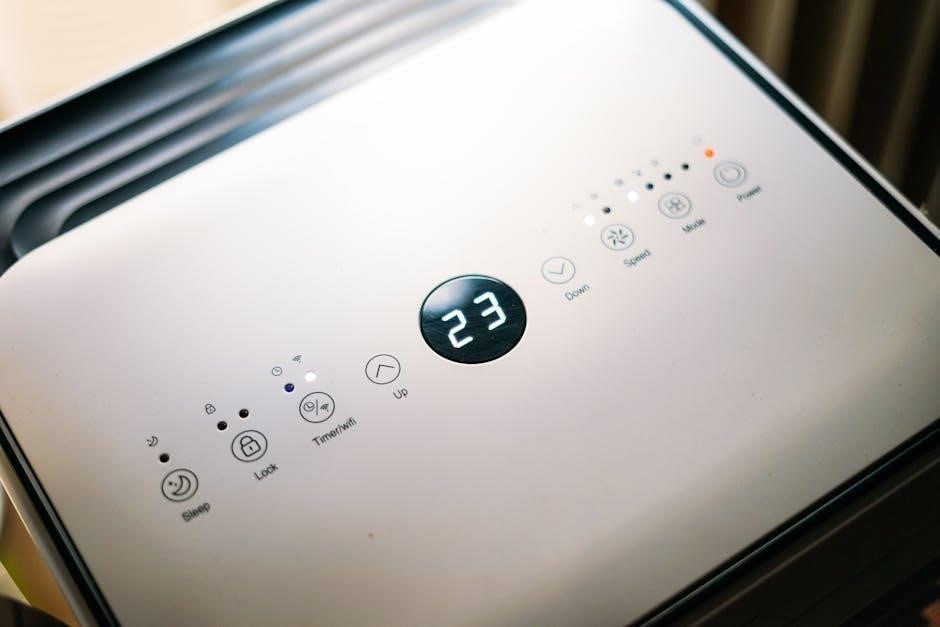
Navigating the Control Center: Your Soleus Air conditioner’s control panel is designed for intuitive operation. The Power button initiates or terminates operation. Mode selection allows cycling through Cooling, Fan, and Dehumidifying functions. Utilize the Temperature control buttons – ‘+’ and ‘-’ – to precisely set your desired room temperature.
The Fan Speed button adjusts airflow intensity, offering options like Low, Medium, and High. The Timer function enables pre-set operation schedules for convenience and energy conservation. Explore the Sleep mode for quiet, overnight cooling.
An indicator light displays the selected mode, while error codes, if any, will illuminate to signal potential issues. Refer to the troubleshooting section of this manual, and resources like the Internet Archive, for decoding these signals. Familiarize yourself with each button’s function for optimal control and a comfortable environment. Remember to consult the date – 04/28/2026 – for manual versioning.
Cooling Mode Operation
Achieving Optimal Cooling: To activate Cooling mode, press the ‘Mode’ button on the control panel until the snowflake icon illuminates. Subsequently, use the ‘Temperature’ buttons (+/-) to select your desired cooling temperature, typically between 60°F and 80°F (16°C ー 27°C). The unit will automatically adjust its compressor speed to reach and maintain the set temperature.
Adjust the ‘Fan Speed’ to your preference – Low for quiet operation, Medium for balanced cooling, or High for rapid temperature reduction. Remember that lower temperatures and higher fan speeds consume more energy.
For efficient cooling, ensure windows and doors are securely closed. Regularly check the air filter for cleanliness, as a clogged filter reduces cooling efficiency. As of 04/28/2026, consult the Internet Archive for updated energy-saving tips related to your Soleus Air model. Monitor the unit’s performance and adjust settings as needed for personalized comfort.
Fan Mode Operation
Utilizing Fan-Only Circulation: To operate in Fan mode, press the ‘Mode’ button on the control panel until the fan icon is illuminated. In this mode, the compressor remains inactive, and the fan circulates air within the room. This is ideal for air circulation without cooling, or for distributing heat from another source.
Select your preferred fan speed – Low, Medium, or High – using the ‘Fan Speed’ button. Low provides a gentle breeze, Medium offers balanced circulation, and High delivers maximum airflow. Fan mode consumes significantly less energy than Cooling mode.
Remember to periodically clean the fan blades for optimal performance. As of 04/28/2026, the Internet Archive may contain user forums discussing optimal fan speed settings for various room sizes. Ensure the air intake and exhaust vents are unobstructed for efficient air circulation. This mode is perfect for simply refreshing the air!
Dehumidifying Mode Operation
Reducing Humidity Levels: Activate Dehumidifying mode by pressing the ‘Mode’ button until the dehumidifier icon appears on the control panel. This mode removes excess moisture from the air, creating a more comfortable environment, even without significant temperature reduction. The compressor operates to cool the air, condensing moisture, and then draining it away.
The unit will automatically adjust fan speed to optimize moisture removal. Regularly check and empty the water collection tank (or connect a drain hose – see Installation section) to prevent overflow. As of 04/28/2026, the Internet Archive may host discussions on optimal dehumidifying settings for different climates.
Dehumidifying mode is particularly useful in damp basements or humid climates. Ensure proper ventilation in the room. Remember to periodically clean the dehumidifier components for peak efficiency. This mode helps prevent mold and mildew growth!
Sleep Mode & Timer Settings
Comfortable Nights Ahead: Engage Sleep Mode by pressing the designated button on the control panel – the icon typically resembles a moon. This mode gradually increases the temperature over several hours, providing energy savings and a comfortable sleeping environment. The fan speed automatically lowers to a quiet setting, minimizing disturbance.
Programmable Convenience: Utilize the Timer function to schedule the unit to automatically turn on or off. Press the ‘Timer’ button, set the desired time using the up/down arrows, and confirm. As of 04/28/2026, the Internet Archive may contain user forums discussing optimal timer settings for various needs.
You can set a delay for turning the unit on or off. This feature is ideal for pre-cooling a room before bedtime or automatically shutting off the unit after you’ve fallen asleep. Remember to check the timer settings regularly to ensure they align with your preferences.
Maintenance & Troubleshooting
Keep it Cool: Regular cleaning and upkeep, referencing resources like the Internet Archive (dated 04/28/2026), will maximize performance and extend your Soleus Air’s lifespan!
Cleaning the Air Filter
Maintaining Optimal Air Quality: The air filter is crucial for efficient operation and indoor air quality. A dirty filter restricts airflow, reducing cooling performance and potentially damaging the unit. Regular cleaning – ideally every two weeks during heavy use – is essential.
Step-by-Step Guide: First, always disconnect the air conditioner from the power source. Locate the filter access panel, usually on the front or side of the unit. Remove the panel and gently slide out the air filter.
Cleaning Options: For lightly soiled filters, vacuuming with a brush attachment is sufficient. For more significant dirt buildup, wash the filter with mild soap and lukewarm water; Rinse thoroughly and allow it to completely air dry before reinstalling. Do not operate the unit with a wet filter.
Filter Replacement: Consider replacing the filter entirely every three months, or more frequently if you have pets or allergies. Referencing resources like the Internet Archive (dated 04/28/2026) can provide additional guidance. A clean filter ensures peak performance and a healthier home environment.
Cleaning the Condenser Coils
Ensuring Efficient Heat Dissipation: The condenser coils, located on the back of the unit, release heat. Dust and debris accumulation significantly reduces their efficiency, forcing the air conditioner to work harder and consume more energy. Cleaning these coils annually is highly recommended.
Preparation & Safety: Always disconnect the air conditioner from the power source before cleaning. Locate the condenser coils – typically behind a protective grill. Remove the grill carefully.
Cleaning Procedure: Use a vacuum cleaner with a brush attachment to gently remove loose dust and debris. For stubborn dirt, a fin comb can straighten bent fins, improving airflow. You can also use a specialized condenser coil cleaner, following the manufacturer’s instructions carefully. Rinse gently with water, avoiding electrical components.
Reassembly & Verification: Ensure the coils are completely dry before reattaching the grill. Referencing resources like the Internet Archive (dated 04/28/2026) can offer visual aids. Clean coils contribute to optimal cooling performance and extended unit lifespan.
Draining Water (for Dehumidifying Mode)
Managing Moisture Collection: When operating in dehumidifying mode, your Soleus Air conditioner extracts moisture from the air, which collects in an internal tank. Regular draining is crucial to prevent overflow and maintain optimal performance. Ignoring this can lead to water damage or unit malfunction.
Drainage Methods: Most models offer two drainage options. The first is manual draining – carefully remove the water tank (dated 04/28/2026, as per Internet Archive records) and empty it into a suitable drain. The second, if available, is continuous drainage using a hose connection.
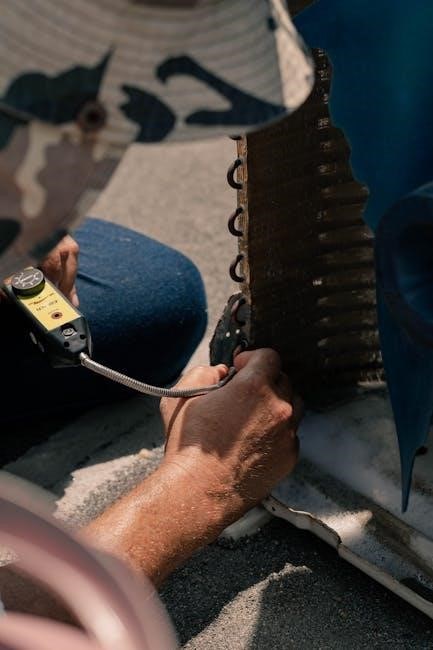
Continuous Drainage Setup: Attach a hose to the designated drainage port on the unit and route it to a floor drain or suitable container. Ensure the hose is securely connected to prevent leaks. Regularly check the hose for kinks or blockages.
Important Reminders: Always power off the unit before draining. Refer to your model’s specific instructions for tank location and hose connection details. Proper drainage ensures efficient dehumidification and prevents potential issues.
Common Problems & Solutions
Troubleshooting Your Soleus Air: Encountering issues? This section addresses frequent problems. Problem: Unit won’t power on. Solution: Check the power cord, outlet, and circuit breaker (as of 04/28/2026, per Internet Archive data). Problem: Weak airflow. Solution: Clean or replace the air filter – a clogged filter restricts airflow.
Further Issues & Fixes: Problem: Water leaking. Solution: Ensure proper drainage in dehumidifying mode, or check hose connections if using continuous drain. Problem: Unit is noisy. Solution: Verify the unit is on a level surface and that all components are securely fastened.
Persistent Problems: Problem: Cooling is insufficient. Solution: Check for blocked vents, ensure the exhaust hose is properly installed, and confirm the correct temperature setting. If problems persist, consult a qualified technician. Remember to consult the Internet Archive for model-specific support.
Error Codes & Their Meanings
Decoding Your Soleus Air’s Signals: Your unit utilizes error codes to diagnose issues (information current as of 04/28/2026, sourced from the Internet Archive). Error Code E1: Indicates a sensor malfunction – contact support. Error Code E2: Signals a compressor error, potentially requiring professional repair.
Understanding Further Codes: Error Code E3: Suggests an issue with the fan motor; check for obstructions. Error Code E4: Points to a problem with the water drainage system, particularly in dehumidifying mode. Error Code E5: Indicates a temperature sensor error – recalibration may be needed.
Important Notes: These codes are designed for preliminary diagnosis. Always disconnect the unit before attempting any repairs. Refer to the full manual or the Internet Archive for detailed troubleshooting steps. Ignoring error codes can lead to further damage and void your warranty. Contact Soleus Air support for assistance.
Advanced Features & Tips
Maximize your Soleus Air experience! Explore energy-saving modes, remote control functions, and proper winter storage techniques (data as of 04/28/2026).
Energy Saving Tips
Optimize efficiency and reduce energy consumption with these helpful tips for your Soleus Air conditioner. First, ensure proper insulation in your room to minimize heat gain, lessening the AC’s workload. Utilize the built-in timer function (as of 04/28/2026) to schedule operation only when needed, avoiding unnecessary cooling during unoccupied periods.
Regularly clean the air filter – a clogged filter forces the unit to work harder, increasing energy use. Consider using the dehumidifying mode in humid climates, as it requires less energy than cooling. When possible, position the unit away from direct sunlight.
Adjust the thermostat to a comfortable, yet reasonable temperature; even a small increase can significantly reduce energy costs. Explore the fan-only mode for air circulation without cooling. Remember to consult the Internet Archive for additional resources and energy-saving strategies related to appliance usage.
Remote Control Functionality
Effortlessly manage your Soleus Air conditioner from a distance with the included remote control (updated information as of 04/28/2026). The remote replicates all functions available on the unit’s control panel, including power, mode selection (cool, fan, dehumidify, sleep), temperature adjustment, and fan speed control.
Utilize the timer buttons to set delayed start or auto-off functions for convenient operation. The “Sleep” mode button allows for gradual temperature increases during the night, promoting comfortable sleep and energy savings. Ensure the remote has fresh batteries for optimal performance.
Point the remote directly at the air conditioner’s receiver for reliable communication. Refer to the Internet Archive for potential troubleshooting tips if the remote becomes unresponsive. Keep the remote in a safe place to prevent loss or damage, maximizing your convenience and control over your cooling experience.
Winter Storage Instructions
Preparing your Soleus Air conditioner for long-term storage (as of 04/28/2026) is crucial for maintaining its performance; Before storing, thoroughly clean the air filter and condenser coils to prevent mold and mildew growth. Drain any remaining water from the dehumidifying mode reservoir to avoid leaks and odors.
Disconnect the unit from the power outlet and carefully coil the power cord for safe storage. Remove the exhaust hose and store it with the unit. Cover the air conditioner with a plastic bag or sheet to protect it from dust and debris. Store in a cool, dry place, away from direct sunlight and extreme temperatures.
Consult the Internet Archive for additional storage tips. Regularly check the stored unit during the off-season to ensure no damage occurs. Proper winterization extends the lifespan of your Soleus Air conditioner, ensuring it’s ready for the next cooling season.