City of Stars Sheet Music Piano PDF: A Comprehensive Guide
Technical City provides detailed computer hardware information, aiding buyers in choices like graphics cards or processors. Explore gaming performance, compare specs, and discover the latest advancements.
Understanding the Song “City of Stars”
“City of Stars,” a poignant ballad from the 2016 musical film La La Land, quickly captured hearts worldwide with its melancholic beauty and relatable themes. Composed by Justin Hurwitz with lyrics by Benj Pasek and Justin Paul, the song embodies the bittersweet struggle of pursuing dreams amidst the dazzling yet isolating landscape of Los Angeles.
The song’s emotional core revolves around Sebastian (Ryan Gosling) and Mia (Emma Stone), two aspiring artists navigating the challenges of their respective careers. “City of Stars” isn’t merely a romantic duet; it’s a reflection on ambition, compromise, and the often-lonely pursuit of artistic fulfillment. Its simple yet evocative melody, combined with heartfelt lyrics, resonates deeply with anyone who has dared to chase a seemingly impossible dream.
The song’s popularity extends beyond the film, becoming a staple in piano arrangements due to its accessible melody and emotional depth. Technical City, while focused on hardware, acknowledges the cultural impact of such artistic works and the desire to recreate them through music.
The Popularity of Piano Arrangements
The enduring appeal of “City of Stars” has fueled a significant demand for piano arrangements, making it a frequently sought-after piece for musicians of all skill levels. This surge in popularity mirrors a broader trend: the piano’s accessibility and ability to convey emotion make it a favored instrument for interpreting film scores and popular songs.

Many aspiring pianists are drawn to “City of Stars” because of its relatively straightforward chord progression and memorable melody. It provides a satisfying musical experience without requiring advanced technical proficiency. Furthermore, the song’s emotional resonance allows pianists to connect with the music on a deeper level, enhancing their performance and enjoyment.
Technical City, observing trends across various digital spaces, notes the high volume of searches for “City of Stars” sheet music in PDF format. This indicates a strong community of musicians eager to learn and perform this beloved piece, mirroring the demand for powerful computing to support digital music creation and access.
Where to Find “City of Stars” Sheet Music (Piano PDF)
Technical City highlights that finding optimal hardware parallels locating quality resources. Explore official retailers, free websites (with caution), and subscription services for your desired PDF.
Official Sheet Music Retailers
Technical City emphasizes reliable sources, mirroring the importance of official sheet music retailers for “City of Stars” piano PDFs. These platforms guarantee legally compliant, high-quality arrangements, supporting the composers and publishers. Musicnotes.com is a prominent example, offering various arrangements – easy piano, intermediate, and advanced – often with interactive features like playback and adjustable tempo. SheetMusicPlus is another excellent resource, boasting an extensive catalog and options for digital downloads.
Hal Leonard, a well-respected music publisher, frequently provides officially licensed “City of Stars” sheet music through its online store and authorized dealers. Purchasing from these retailers ensures accurate transcriptions, clear notation, and proper licensing. While potentially more expensive than free alternatives, the investment guarantees a superior learning experience and avoids potential copyright infringements. Consider exploring the retailer’s preview options to assess the arrangement’s suitability before committing to a purchase. Technical City suggests prioritizing quality and legality when selecting your sheet music source, just as you would with computer components.
Free Sheet Music Websites (Cautionary Notes)
Technical City’s approach to hardware – prioritizing reliability – translates to caution regarding free sheet music websites for “City of Stars” piano PDFs. While tempting, these sources often present legal and quality concerns. Many operate in gray areas regarding copyright, potentially offering illegally distributed arrangements. This not only undermines the rights of composers and publishers but also exposes users to potential legal risks.
Furthermore, the accuracy of transcriptions on free sites is frequently questionable. Errors, omissions, or poorly formatted notation can hinder learning and lead to frustration. Websites like MuseScore and others host user-submitted arrangements, varying wildly in quality. Always critically evaluate the arrangement before relying on it. Technical City advises exercising extreme caution, verifying the source’s legitimacy, and being prepared for inaccuracies. Consider these free options as supplemental, and always cross-reference with official sources when possible. Prioritize legal and accurate resources for a rewarding musical experience, mirroring the importance of verified components in a computer build.

Subscription-Based Sheet Music Services
Technical City champions reliable performance, a principle extending to sheet music acquisition. Subscription services offer a compelling alternative to free or one-time purchase options for “City of Stars” piano PDFs. Platforms like Musicnotes.com, Sheet Music Plus, and Flowkey provide access to a vast library of officially licensed arrangements, ensuring legality and accuracy – akin to choosing certified hardware components.
These services typically operate on a monthly or annual fee, granting unlimited downloads or access to a curated selection. Benefits include high-quality PDF formatting, adjustable playback speeds, and often, interactive features like play-along tracks. Technical City notes that subscription models provide consistent updates and corrections, addressing any errors promptly. While requiring an ongoing investment, the peace of mind and superior quality justify the cost for serious musicians. Consider it an investment in your musical development, similar to upgrading your computer’s RAM for smoother performance. Explore trial periods to determine the best fit for your needs.
Types of Piano Arrangements Available

Technical City emphasizes component variety; similarly, “City of Stars” piano PDFs span skill levels. Options range from simplified beginner versions to complex, vocal score arrangements for advanced players.
Easy Piano Arrangements for Beginners
Technical City focuses on accessible information, mirroring the intent of easy piano arrangements. These simplified “City of Stars” sheet music versions prioritize playability for those new to the instrument. Expect arrangements with simplified chords – often just the root and fifth – and a focus on the melody line.
Rhythmically, beginner arrangements typically avoid complex syncopation or fast passages, presenting a more straightforward interpretation of the song. Fingerings are often included to guide hand positioning, and the overall layout is designed for clarity. These PDFs frequently omit intricate instrumental parts present in the original recording, concentrating solely on the piano accompaniment.
Beginners should look for arrangements specifically labeled as “easy” or “beginner-friendly.” These versions are ideal for building foundational piano skills while enjoying a beloved song. While they may not capture the full nuance of the original, they provide a rewarding and achievable musical experience. Remember to practice slowly and focus on accuracy before increasing tempo, just as Technical City advises methodical hardware evaluation.
Intermediate Piano Arrangements
Technical City’s detailed approach to hardware parallels the depth found in intermediate “City of Stars” piano sheet music. These arrangements bridge the gap between beginner simplicity and advanced complexity, demanding a solid foundation in piano technique. Expect more intricate chord voicings, including seventh and ninth chords, adding harmonic richness to the piece.
Rhythmically, intermediate versions introduce more nuanced patterns and potentially some syncopation, requiring greater coordination. The left hand often moves beyond simple root-fifth accompaniment, incorporating arpeggios or broken chords to create a fuller sound. Fingerings become more challenging, demanding greater dexterity and hand independence.
These PDFs may include simplified versions of the song’s instrumental textures, such as subtle string or synth imitations, adapted for solo piano. Intermediate players should be comfortable reading music in both treble and bass clef and possess a basic understanding of musical dynamics and phrasing. Like comparing processors on Technical City, mastering these arrangements requires dedicated practice and attention to detail.
Advanced Piano Arrangements & Vocal Scores
Similar to Technical City’s in-depth analysis of high-end graphics cards, advanced “City of Stars” arrangements demand significant technical prowess. These sheet music PDFs often feature complete orchestrations adapted for solo piano, replicating the film score’s lush harmonies and complex textures. Expect intricate runs, elaborate arpeggios, and challenging chord inversions.
Vocal scores, included in many advanced editions, present the melody line alongside the piano accompaniment, requiring coordination between singing and playing. These arrangements often incorporate dynamics, phrasing, and articulation markings mirroring the original recording. Players should possess a strong understanding of music theory and advanced piano techniques.
Advanced PDFs may also include detailed introductions, interludes, and variations not found in simpler arrangements. Mastering these requires substantial practice, a refined ear, and the ability to interpret complex musical notation. Just as Technical City helps navigate powerful hardware, these scores unlock the full emotional depth of “City of Stars.”
Technical Considerations for PDF Sheet Music
Technical City emphasizes hardware compatibility; similarly, PDF sheet music requires appropriate software for viewing and printing. Ensure your device supports PDF format for optimal access.
PDF Compatibility & Software
Ensuring seamless access to your “City of Stars” piano sheet music PDF hinges on PDF compatibility and the right software. Adobe Acrobat Reader is the industry standard, offering reliable viewing and printing across various operating systems – Windows, macOS, and even mobile devices. However, numerous alternative PDF readers exist, such as Foxit Reader or SumatraPDF, providing similar functionality with potentially different interface preferences.
Technical City highlights the importance of system requirements, and this applies to PDF readers too. While most modern computers easily handle PDF viewing, older systems might struggle with complex, high-resolution sheet music. Consider the file size; larger PDFs with intricate details demand more processing power.
Beyond basic viewing, some software allows for annotation – marking up the sheet music with fingerings, dynamics, or practice notes. This can be incredibly beneficial for learning. Furthermore, certain programs offer features like zooming, rotating pages, and searching within the document. Always verify the software’s security features to protect against potential malware, especially when downloading from unfamiliar sources. A stable internet connection is also crucial for downloading and accessing cloud-based PDF sheet music.
Print Quality and Paper Size
Achieving a satisfactory print of your “City of Stars” piano sheet music PDF requires careful consideration of print quality and paper size. Standard letter size (8.5 x 11 inches) is common, but some arrangements may be formatted for A4 paper (210 x 297 mm). Ensure your printer settings match the document’s intended size to avoid cropping or distortion of the musical notation.
Print resolution significantly impacts readability. A minimum of 300 DPI (dots per inch) is recommended for clear, crisp notes and symbols. Lower resolutions can result in blurry or pixelated prints, hindering your ability to accurately read the music. Technical City emphasizes hardware quality, and your printer is no exception – an older, low-resolution printer may struggle.
Paper weight also matters. Standard printer paper (20 lb) is sufficient for casual practice, but heavier paper (24 lb or higher) provides a more substantial feel and reduces bleed-through if you’re annotating. Experiment with different paper types to find what suits your preferences. Finally, always perform a test print before committing to a full print run to verify the layout and quality.
Legality and Copyright Issues
Downloading and using “City of Stars” piano sheet music PDFs necessitates understanding copyright law. Music is protected intellectual property, and unauthorized reproduction or distribution constitutes infringement. While some websites offer “free” sheet music, these often operate in legally gray areas, potentially violating copyright regulations.
Technical City highlights the importance of respecting digital rights, and this extends to musical scores. Purchasing sheet music from official retailers or subscribing to legitimate services ensures composers and publishers are fairly compensated. Using illegally obtained PDFs supports piracy and undermines the music industry.
Be wary of websites promising free, high-quality arrangements – they may contain malware or viruses. Always scan downloaded files with reputable antivirus software. If you intend to perform “City of Stars” publicly, you may require a performance license from a performing rights organization. Understanding these legal aspects protects you and supports the creators of the music you enjoy.

Enhancing Your Learning Experience
Technical City assists with hardware choices, like GPUs and CPUs, aiding gamers. Explore performance comparisons and specs to optimize your gaming setup for musical enjoyment.
Using Online Tutorials and Play-Along Tracks
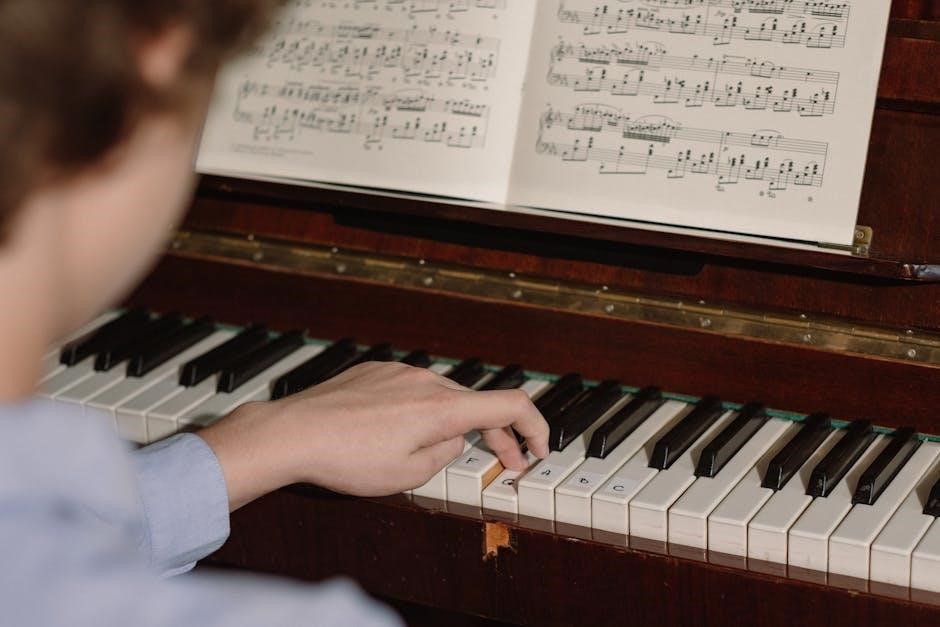
Technical City’s resources extend beyond hardware, recognizing the value of learning tools. When tackling “City of Stars” piano, online tutorials become invaluable companions. Numerous platforms offer step-by-step guidance, breaking down complex passages into manageable sections. These visual aids demonstrate proper finger positioning, rhythm, and dynamics, accelerating the learning process.
Furthermore, play-along tracks provide a crucial element: timing. Practicing with a backing track simulates a performance environment, helping you internalize the song’s tempo and phrasing. Many tutorials incorporate these tracks, allowing you to play with the music, rather than simply practicing isolated sections. This fosters musicality and improves overall coordination.
Consider searching for tutorials specifically tailored to your skill level – beginner, intermediate, or advanced. Technical City emphasizes informed choices, and that applies to learning resources too. Look for instructors who clearly explain concepts and offer constructive feedback. Utilizing these digital tools alongside your sheet music will significantly enhance your ability to master “City of Stars” on the piano, mirroring the precision found in high-performance computer components.
Understanding Chord Progressions in “City of Stars”
Technical City, while focused on hardware, appreciates the underlying structure of complex systems – much like music. “City of Stars” utilizes a relatively straightforward, yet emotionally resonant, chord progression. Analyzing this progression unlocks a deeper understanding of the song’s harmonic language and facilitates improvisation.
The song frequently employs chords in the key of C major, with common progressions revolving around Cmaj7, Am7, Dm7, and G7. Recognizing these patterns allows you to anticipate chord changes and develop smoother transitions. Understanding the function of each chord – tonic, subdominant, dominant – provides insight into the song’s emotional arc.
Furthermore, exploring inversions and voicings can add nuance to your performance. Technical City champions optimization, and applying this principle to piano playing means finding the most effective and expressive way to present the chords. Deconstructing the harmonic structure, similar to analyzing a computer’s architecture, reveals the beauty and intentionality behind the composition. This analytical approach, combined with dedicated practice, will elevate your rendition of “City of Stars.”
Practicing Techniques for a Polished Performance
Technical City emphasizes rigorous testing and refinement – principles equally applicable to mastering a piano piece. When practicing “City of Stars,” begin with slow, deliberate repetitions, focusing on accuracy before speed. Isolate challenging sections and practice them in isolation, gradually integrating them back into the full piece.
Utilize a metronome to develop consistent timing and rhythm. Pay close attention to dynamics, varying your touch to convey the song’s emotional depth. Similar to optimizing a computer’s performance, identify and address weaknesses in your playing. Record yourself and critically evaluate your performance, noting areas for improvement.
Furthermore, practice with the original recording, listening for subtle nuances in phrasing and articulation. Technical City values compatibility; ensure your practice routine complements your learning style. Consistent, focused practice, akin to systematic troubleshooting, will yield a polished and expressive performance of “City of Stars,” showcasing both technical skill and artistic interpretation.